
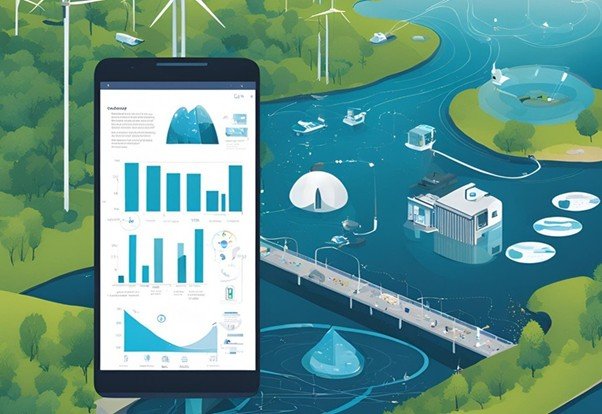
Maintaining water quality in cooling towers is crucial for ensuring efficient operation, reducing maintenance costs, and minimizing environmental impact. Traditional water quality management methods often involve manual sampling and testing, which can be time-consuming and prone to delays. However, the integration of the Internet of Things (IoT) offers a revolutionary approach to water quality management, enabling real-time monitoring, predictive maintenance, and enhanced efficiency. In this blog, we’ll explore how IoT is transforming cooling tower water quality management and the benefits it brings.
The Role of Water Quality in Cooling Tower Performance
Water quality directly impacts the efficiency and longevity of cooling towers. Poor water quality can lead to:
- Scale Formation: Minerals such as calcium and magnesium can precipitate and form scale, reducing heat transfer efficiency.
- Corrosion: Imbalanced pH levels and high dissolved oxygen can accelerate corrosion, leading to equipment damage.
- Microbial Growth: Warm and nutrient-rich water can promote algae and bacteria growth, causing fouling and microbial-induced corrosion (MIC).
- Increased Operational Costs: Poor water quality necessitates frequent cleaning, chemical treatment, and equipment repair, driving up costs.
How IoT Transforms Water Quality Management
IoT technology enables real-time data collection and analysis, offering significant advantages over traditional water management practices. Key aspects include:
- Real-Time Monitoring: IoT sensors continuously measure critical parameters such as pH, conductivity, temperature, dissolved oxygen, and turbidity. This data is transmitted to a centralized dashboard, enabling operators to monitor water quality in real-time.
- Predictive Maintenance: IoT systems analyse historical and real-time data to predict potential issues, such as scaling or corrosion, before they occur. This proactive approach reduces unplanned downtime.
- Automated Control Systems: IoT-enabled controllers can automatically adjust chemical dosing, blowdown rates, and water flow based on real-time water quality data, ensuring optimal conditions.
- Remote Access and Alerts: Operators can access water quality data remotely via smartphones or computers. Automated alerts notify personnel of anomalies, enabling swift corrective actions.
- Data Analytics and Insights: Advanced analytics provide insights into water usage trends, treatment effectiveness, and system performance, helping optimize operations.
Benefits of IoT in Cooling Tower Water Quality Management
- Improved Efficiency: IoT ensures consistent water quality, enhancing heat transfer efficiency and reducing energy consumption.
- Cost Savings: By preventing scaling, corrosion, and microbial growth, IoT minimizes maintenance and chemical treatment costs.
- Environmental Sustainability: Optimized water treatment reduces water wastage and chemical usage, promoting sustainable operations.
- Enhanced System Reliability: Predictive maintenance and real-time monitoring reduce the risk of unexpected failures, ensuring continuous operation.
- Regulatory Compliance: IoT systems provide accurate and reliable data for regulatory reporting, ensuring compliance with water quality standards.
Implementation Considerations
To successfully implement IoT for water quality management in cooling towers, consider the following:
- Selection of Sensors: Choose reliable and accurate sensors for measuring critical water quality parameters.
- Integration with Existing Systems: Ensure IoT devices are compatible with existing water treatment and control systems.
- Data Security: Implement robust cybersecurity measures to protect sensitive data from unauthorized access.
- Training and Support: Train personnel to use IoT systems effectively and provide ongoing technical support.
- Scalability: opt for scalable IoT solutions that can accommodate future expansions or additional cooling towers.
Conclusion
The integration of IoT into cooling tower water quality management offers unparalleled advantages, from real-time monitoring to predictive maintenance. By adopting IoT technology, organizations can enhance operational efficiency, reduce costs, and achieve sustainable water management. As industries increasingly prioritize resource optimization, IoT will undoubtedly play a pivotal role in shaping the future of cooling tower operations.
References
- IoT-Enabled Water Management for Cooling Systems. (Cooling Technology Institute, 2023). Available at: https://www.cti.org
- Advances in IoT for Industrial Water Treatment. (Water Technology Magazine, 2022). Available at: https://www.watertechonline.com
- The Role of Predictive Analytics in Water Quality Monitoring. (Journal of Industrial IoT, 2023). Available at: https://www.elsevier.com
- Optimizing Cooling Tower Performance with IoT. (American Society of Mechanical Engineers, 2023). Available at: https://www.asme.org
- Enhancing Water Efficiency with IoT Solutions. (World Resources Institute, 2023). Available at: https://www.wri.org


