
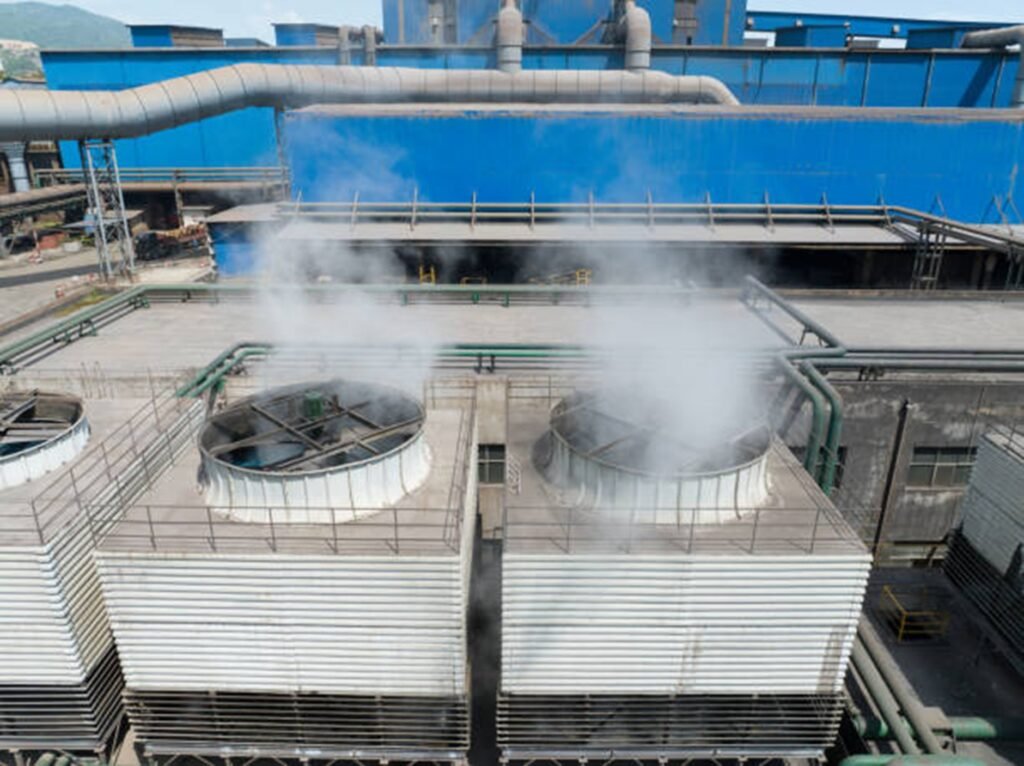
Cooling towers are essential for heat dissipation in industrial and commercial operations, but they face significant challenges due to chloride-induced corrosion. Chloride ions are highly aggressive, penetrating protective oxide layers on metal surfaces and accelerating localized corrosion, particularly pitting and crevice corrosion. If not properly controlled, excessive chloride levels can lead to structural degradation, efficiency losses, and expensive maintenance issues.
In this article, we explore the chemical mechanisms behind chloride-induced corrosion, discuss industry-recommended chloride limits, and outline best practices for monitoring and control.
Why Is Chloride So Harmful in Cooling Towers?
Unlike general corrosion, which spreads evenly across a metal surface, chloride-induced corrosion is highly localized and aggressive. Chloride ions:
- Break down passive protective layers: Many metals, including stainless steel, form a thin oxide layer that protects against corrosion. Chlorides disrupt this layer, exposing the bare metal to oxidation and damage.
- Promote pitting corrosion: Unlike uniform corrosion, pitting corrosion creates deep, localized pits that can rapidly lead to system failure. Even small increases in chloride concentration can cause significant damage.
- Increase the conductivity of water: Higher conductivity accelerates electrochemical reactions, speeding up the rate of metal loss and structural degradation.
Threshold Chloride Levels for Common Cooling Tower Materials
To prevent corrosion, industries follow specific guidelines for chloride concentration in cooling tower water:
| Material | Maximum Recommended Chloride Level (ppm) |
|---|---|
| Carbon Steel | 200–300 ppm |
| 304 Stainless Steel | 100–200 ppm |
| 316 Stainless Steel | 500–1,000 ppm |
| Copper Alloys | 50–150 ppm |
| Titanium / FRP | Highly resistant to chlorides |
Note: Values may vary depending on system design, operating conditions, and presence of corrosion inhibitors.
Exceeding these chloride limits increases the risk of pitting, stress corrosion cracking, and overall material degradation.
The Impact of High Chloride Levels on Cooling Tower Performance
1. Accelerated Corrosion and Equipment Degradation
Excessive chlorides lead to rapid material loss, particularly in heat exchangers, pipes, and cooling tower basins. Pitting corrosion can penetrate metal surfaces in just a few months, significantly reducing equipment lifespan.
2. Reduced Heat Transfer Efficiency
Chloride-induced corrosion forms deposits and scaling on heat exchanger surfaces, decreasing cooling efficiency. A 1-mm layer of corrosion buildup can cause a 10% drop in heat transfer efficiency, increasing energy consumption.
3. Increased Maintenance and Replacement Costs
Cooling towers with unmanaged chloride levels face:
- 30–50% higher repair and replacement costs over their lifespan
- 40% of unplanned maintenance costs linked to corrosion-related failures
- Shortened equipment life (from 20 years to as little as 10–12 years)
4. Compliance and Environmental Risks
High chloride discharge levels can violate regulatory limits, leading to fines and penalties. Facilities may also face increased scrutiny for water quality violations.
Best Practices for Monitoring and Controlling Chloride Levels
1. Routine Water Quality Testing
Regular chloride monitoring is essential. Industry best practices recommend:
- Daily or weekly chloride tests using on-site meters
- Continuous online monitoring for real-time detection of fluctuations
- Keeping chloride concentrations below material-specific limits to prevent damage
2. Optimized Blowdown Management
Blowdown—the controlled removal of high-mineral-content water—helps maintain chloride levels within safe limits. Automated blowdown systems can:
- Reduce chloride buildup by up to 50%
- Optimize water usage, improving efficiency
- Prevent scaling and corrosion by maintaining proper cycles of concentration
3. Corrosion Inhibitors for Chloride Protection
Adding chromate-based, molybdate-based, or phosphate-based inhibitors can:
- Form protective layers on metal surfaces to reduce chloride attack
- Extend equipment life by up to 30%
- Lower corrosion rates by as much as 50% when used effectively
4. Water Treatment Technologies
For facilities using high-chloride water sources, advanced treatments can help:
- Reverse Osmosis (RO): Removes excess chlorides before entering the cooling system
- Softening Treatments: Reduce scaling and fouling, preventing secondary corrosion issues
5. Using Corrosion-Resistant Materials
For cooling systems exposed to higher chloride levels, upgrading to corrosion-resistant materials is a cost-effective long-term solution. For example:
- 304 Stainless Steel is vulnerable to pitting above 200 ppm chloride
- 316 Stainless Steel performs well up to 1,000 ppm chloride
- Fiberglass-Reinforced Plastic (FRP) and Titanium offer high resistance to chloride-induced corrosion
6. Smart Monitoring & Predictive Maintenance
IoT-based sensors and AI-driven predictive analytics can:
- Detect early signs of chloride-related corrosion before it becomes critical
- Optimize blowdown cycles and chemical dosing
- Reduce maintenance costs by 10–15% through proactive issue resolution
Take Proactive Steps Before It’s Too Late
Chloride-induced corrosion is a major threat to cooling tower efficiency and longevity. Unchecked chloride levels can accelerate pitting corrosion, reduce heat transfer efficiency, and increase maintenance costs—all of which impact operational reliability.
However, proactive monitoring, optimized water treatment, and smart corrosion prevention strategies can safeguard cooling towers against chloride-related damage.
Key Takeaways:
✔ Chlorides break down protective oxide layers, leading to pitting and rapid metal degradation
✔ Industry guidelines recommend chloride levels below 200–300 ppm for carbon steel and 100–200 ppm for 304 stainless steel
✔ Uncontrolled chloride levels can cause a 10% drop in heat transfer efficiency, increasing energy costs
✔ Automated blowdown, corrosion inhibitors, and real-time monitoring can reduce chloride-related risks
✔ Switching to 316 stainless steel, FRP, or titanium can enhance long-term corrosion resistance
The time to act is now. Invest in chloride monitoring and prevention today to avoid costly damage tomorrow. Every effort to regulate chloride levels is a step toward a more efficient, cost-effective, and sustainable cooling system.

Frequently Asked Questions:
Chloride ions are highly corrosive and can break down protective oxide layers on metals, leading to pitting corrosion, crevice corrosion, and stress corrosion cracking. This type of corrosion is localized and can cause rapid material degradation, reducing the lifespan of cooling tower components.
The acceptable chloride concentration depends on the materials used in the system. Industry guidelines suggest:
- Carbon Steel: 200–300 ppm
- 304 Stainless Steel: 100–200 ppm
- 316 Stainless Steel: 500–1,000 ppm
- Copper Alloys: 50–150 ppm
- FRP/Titanium: Highly resistant to chlorides
Exceeding these limits increases the risk of corrosion-related failures.
High chloride levels lead to:
- Reduced heat transfer efficiency (a 1-mm corrosion layer can decrease efficiency by 10%)
- Increased maintenance and repair costs (chloride-induced damage can shorten equipment lifespan by 30–50%)
- Higher water treatment expenses (to mitigate chloride-related damage)
- Environmental compliance risks (excess chloride discharge can lead to regulatory fines)
To manage chloride concentrations effectively:
- Optimize blowdown cycles to remove high-chloride water
- Use corrosion inhibitors (such as molybdate- or phosphate-based inhibitors)
- Implement water treatment solutions (e.g., reverse osmosis to remove excess chlorides)
- Use corrosion-resistant materials like FRP, titanium, or 316 stainless steel
- Monitor water chemistry regularly to prevent chloride buildup
Yes! Some effective treatment methods include:
- Reverse Osmosis (RO): Reduces chloride concentration in makeup water
- Blowdown Optimization: Maintains chloride levels within safe limits
- Chemical Additives: Corrosion inhibitors protect metal surfaces
- Softening Treatments: Help prevent secondary scaling and fouling issues


